What is a Crypto Fund and who is it suitable for?


„There’s a place for bitcoin much like gold — it’s an alternative. For those that are looking to diversify their portfolio, this isn’t a bad asset.“
BlackRock manages over $11 trillion in assets. When the CEO of the world’s largest asset manager describes cryptocurrencies as a legitimate portfolio addition, all wealthy and professional investors should take notice. But how does one invest professionally in this asset class of crypto assets?
For high-net-worth individuals, family offices, and wealth managers in Germany, regulated crypto funds offer an attractive solution.
What Is a Crypto Fund in Germany?
A crypto fund is an alternative investment fund that invests exclusively or predominantly in crypto assets. In Germany, these are so-called special funds (Spezialfonds) that are registered with the Federal Financial Supervisory Authority (BaFin) pursuant to § 282 KAGB.
The crucial difference from other crypto products: a regulated crypto fund holds the crypto assets physically. This means the cryptocurrencies are actually purchased and securely stored and not replicated through derivatives or certificates.
F5 Crypto launched one of the first liquid crypto funds in Germany in 2021. Such a fund is characterized by several features:
- Regulation: BaFin-registered with a German ISIN
- Physical custody: Real crypto assets, not synthetic products
- Regulated service providers: Custody and trading through licensed partners in Germany
- Transparency: Regular reporting and auditing
- Custody account capability: Booking into the client’s custody account like a stock or ETF
This structure significantly minimizes risks. Investors don’t have to deal with technical questions such as wallet security or private key management. The regulated service partners ensure secure custody of the crypto assets and safe trading.
Passive Investments: Holding Bitcoin isn’t enough
Many investors start with a passive approach: they buy Bitcoin or Ethereum directly through a crypto exchange or invest in an ETP (Exchange Traded Product). There are also crypto baskets that bundle multiple cryptocurrencies, such as the top 5 or top 10 by market capitalization.
The problem: these products are static. The composition is rarely adjusted. However, the crypto market is extremely dynamic. New protocols emerge, others lose relevance. Those who only hold Bitcoin miss opportunities in other segments. Those who buy a rigid basket may hold positions that are no longer fundamentally convincing.
Another disadvantage: passive products offer no risk management. During market disruptions, there is no way to reduce volatility or build cash positions.
Why Active Management Is crucial for Crypto
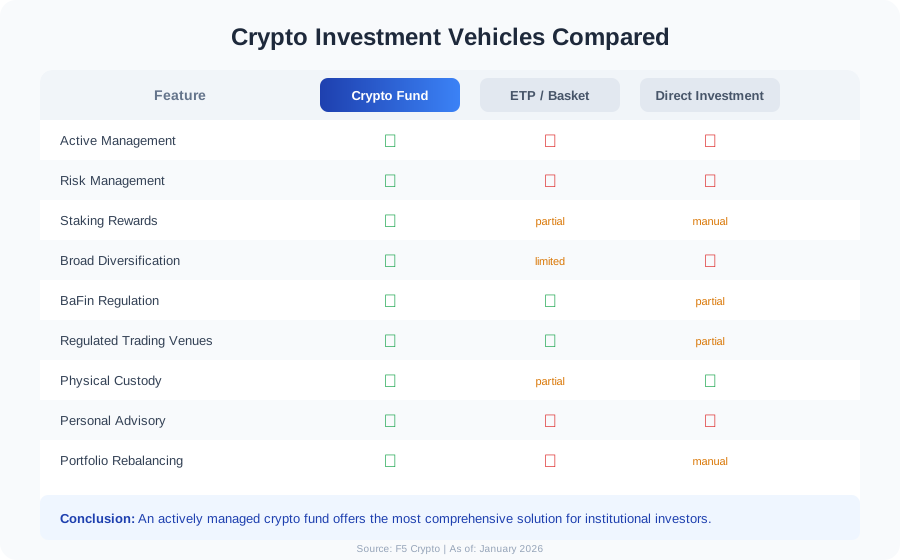
The crypto market is an inefficient asset class. Information is unevenly distributed. Fundamental data is harder to access than with stocks. Fraud occurs. This is precisely why experienced managers can achieve outperformance versus indices over long periods.
Fundamental Analysis and Selection
Good crypto asset management means: every project is fundamentally analyzed. The team, the technology, the token economics, the community — all of this feeds into the valuation. Fraudulent projects are filtered out. Only the most fundamentally convincing cryptocurrencies make it into the portfolio.
The best investments are not only found among the top 10 by market capitalization. There are also projects with excellent fundamentals in the mid-cap and small-cap range. These cannot be replicated through ETPs. An actively managed fund can invest here in a targeted manner.
Risk Management
Another advantage of active funds: they can implement systematic risk management. At F5 Crypto, a proprietary system developed by Prof. Dr. Hermann Elendner is used. It is based on Value-at-Risk (VaR) and monitors market risk at the overall portfolio level.
During market disruptions, volatility is significantly reduced, for example, by building up cash positions. Passive products such as ETPs or baskets do not offer this flexibility. They are fully exposed to the market, even during crash phases.
On-Chain activities for additional returns
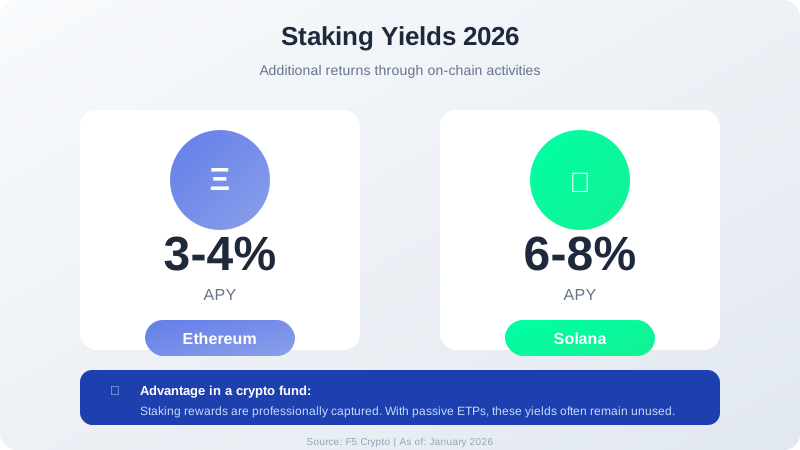
Crypto funds can generate additional returns through on-chain activities. The best-known example is staking: investors make their crypto assets available to secure the network and receive rewards in return.
Current staking yields for the largest protocols (as of early 2026):
- Ethereum: approx. 3 – 4% APY
- Solana: approx. 6 – 8% APY
These returns come in addition to price appreciation. With a passive ETP or a direct investment on an exchange, these earnings often remain unused.
Broad market coverage instead of single bets
With a crypto fund, the entire crypto market can be covered. This is a crucial advantage over a pure Bitcoin investment or a single ETP.
The crypto sector comprises various segments: smart contract platforms, DeFi protocols, infrastructure projects, Layer-2 solutions, and more. A diversified fund can be invested in all relevant areas and adjust the weighting according to market conditions and cycles.
The portfolio is regularly rebalanced. Projects that lose relevance are sold. New, promising protocols are added. This dynamism is essential in the crypto space.
Personal advisory and transparency
An often underestimated advantage of crypto funds: personal advisory. At F5 Crypto, investors receive monthly investor reports and monthly video calls with the CIO. Questions can be asked there: about market conditions, strategy, or individual positions.
The fund managers are always available as contacts. This is particularly valuable for investors who want to better understand the crypto asset class. Family offices and wealth managers appreciate this direct line to experts who have been active in the crypto space at F5 Crypto since 2013.
Who is a Crypto Fund suitable for?
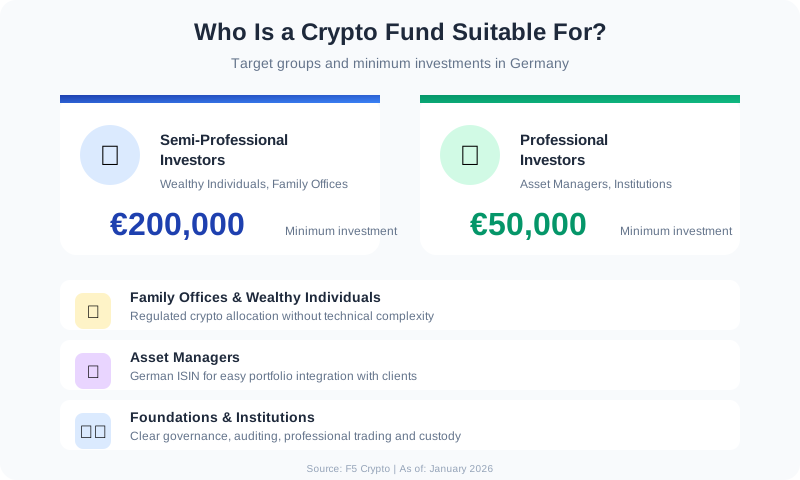
Crypto funds in Germany are aimed at semi-professional and professional investors. The minimum investment is €200,000 for semi-professional investors and €50,000 for professional investors.
A crypto fund is particularly suitable for:
Family offices and high-net-worth individuals (HNWI): They are looking for a regulated, secure way to use crypto as a portfolio addition without having to deal with technical details.
Wealth managers: They want to give their clients access to crypto without having to build their own infrastructure. A BaFin-registered fund with a German ISIN can be easily integrated into existing portfolio structures.
Foundations and institutional investors: They require a regulated product with clear governance, auditing, and professional custody.
Conclusion
A crypto fund offers what passive products cannot: active management, risk management, on-chain returns, and broad market coverage. For wealthy and professional investors in Germany, a BaFin-registered special fund is the most professional way to participate in the value development of cryptocurrencies.
The asset class is volatile, but it is also inefficient. This creates opportunities for experienced managers. Those who want to seize these opportunities will find the right vehicle in an actively managed crypto fund to financially participate in blockchain technology.
Learn more about the F5 Crypto Fund: f5crypto.com/en/fund