Is crypto really the best hedge against inflation?
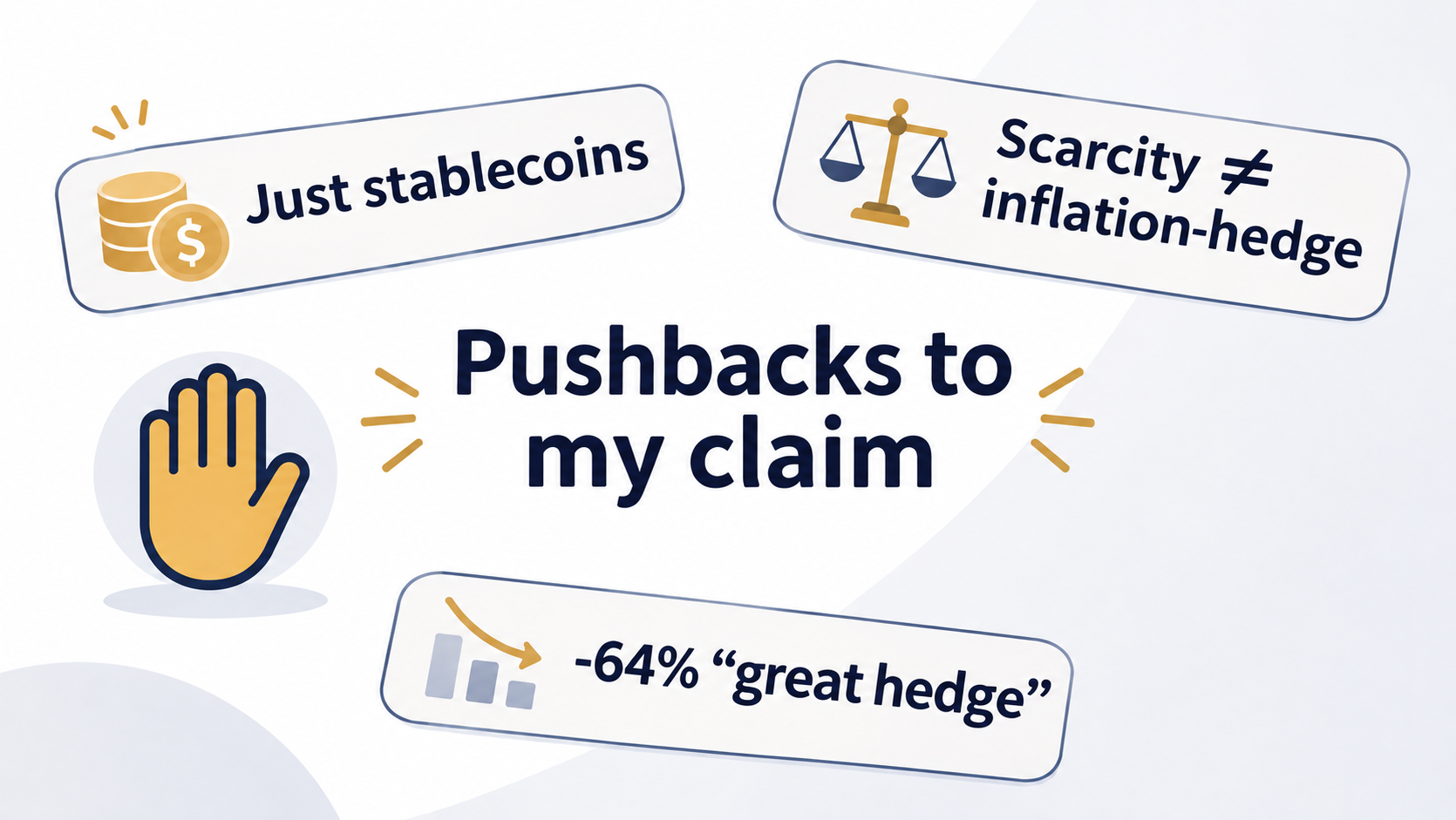

I claimed crypto is the best way to protect your wealth against inflation. There are three strong objections.
1. Bitcoin fell 64% in 2022 when inflation was highest
True. A hedge against inflation that loses purchasing power when inflation is high seems to invalidate the claim.
While 2022 was a year of high inflation, it was also a year of rate hikes and shrinking money supply, which is the opposite of the debt-crisis scenario we want to protect against.
As a result, many inflation hedges lost purchasing power in 2022, e.g. US stocks lost about 20% and Bitcoin about 64%. Over short periods, volatility trumps the long-term effect. Both have reached new all-time highs in 2024.
Over long stretches, fiat currencies lose purchasing power. Bitcoin, gold, stocks and select crypto tokens with revenues retain it. Stocks and these tokens even increase it, in line with business growth, or real GDP growth in the aggregate.
2. Crypto adoption in Türkiye and Argentina is just stablecoins
rue. We showed that in countries with high inflation, crypto adoption is also high. In these two, it is largely stablecoin usage: using crypto-wrapped US dollars. This supports the claim. Savers use crypto to access a less inflationary asset and protect their purchasing power. As crypto software is accessible globally, savers reach a stronger currency without a foreign-currency bank account.
A remaining objection is that crypto in the form of stablecoins is not the same as native crypto tokens. Perhaps savers want dollars, not Bitcoin. Fair point. But savers holding stablecoins still generate revenue for the protocols behind them. SKY, a fund position, sees revenues rise with its USDS stablecoin usage. Demand for digital dollars becomes demand for native tokens.
3. Scarcity alone doesn’t protect against inflation
Correct. Scarcity is necessary, but not sufficient: there must also be demand. Most scarce crypto tokens fail, which proves it.
Will demand for Bitcoin hold? Will it hold for gold? For assets without cash flows, the best answer lies in history. Gold has thousands of years of demand. Bitcoin’s 18-year history is much shorter, yet demand has grown consistently.
Scarcity and demand can create a positive feedback loop. More demand for a scarce asset leads to a rising price, which leads to increased attention, which leads to more demand.
Assets with cash flows are easier to value. As investors decide between cashflowing investments, they weigh the risk and reward and arrive at a fair value. Below it, buyers step in. This applies to most real estate, stocks and the cashflowing crypto tokens that our funds invest in. Their revenues are earned in nominal terms and rise with prices, just as company earnings do.
F5 Crypto Take · Part 3 · November 2026